
The company strengthens its industrial competitiveness by activating a new solar self-consumption facility capable of avoiding the emission of more than 3,600 tons of CO2.
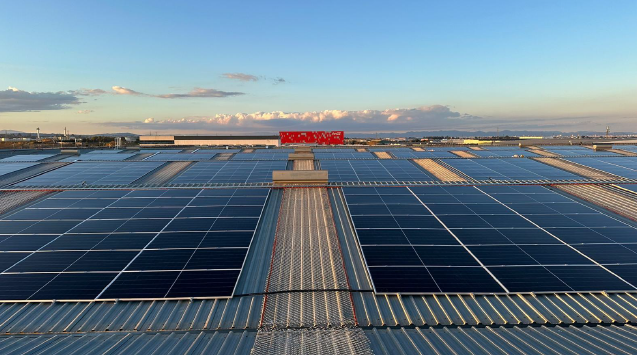
Almussafes, Valencia. – In line with its commitment to cleaner and more efficient production, Grupo Segura announces that the solar plant located on the roof of its Almussafes 2 production center is now operating at full capacity.
This infrastructure represents a key pillar in the Group’s sustainability roadmap, committing to renewable energies as a direct route to decarbonizing its manufacturing processes. In a B2B market where reducing the carbon footprint is a determining factor for OEMs and Tier 1s, Grupo Segura consolidates its position as a supplier aligned with the sustainable development goals (ESG) of its global customers.
Technical capacity and operational efficiency
The facility has been designed to integrate into the plant’s industrial ecosystem, optimizing energy use and reducing dependence on external sources:
- Installed power: 450 kWp.
- Infrastructure: 900 state-of-the-art photovoltaic panels.
- Solar surface area: 2,300 m² of technical coverage.
A quantifiable and strategic environmental impact
Reducing greenhouse gas (GHG) emissions is a top priority in the automotive value chain. With this plant fully operational, Grupo Segura will prevent the emission of 3,683 tons of CO2 over the next 25 years.
To put the positive impact of this energy transition into perspective, the projected data is equivalent to:
- 136,425 trees absorbing CO2 (based on an average of 27kg CO2/year per tree).
- voiding emissions equivalent to 36,834,721 km traveled by a standard vehicle.
- Offsetting the annual consumption of 4,278 Spanish homes.
Innovation at the service of sustainability
With this infrastructure, Grupo Segura not only optimizes its energy cost structure, but also directly improves the sustainable value of the structural components it supplies. The integration of renewable energy sources in production centers is essential to ensure that the tooling and stamping of the future meet the strictest criteria of environmental responsibility.